Green Starry Night Nature Shadow Box Art Review
As a designer who has spent years navigating the intersection of digital art and physical stitching, I approach every new asset with a mix of excitement and skepticism. When I first opened the files for Green Starry Night Nature Shadow Box Art, I wasn't just looking at pixels; I was visualizing how this would translate into thread, stabilizer, and fabric tension. The promise of a 3D layered design featuring rolling hills, a dense pine forest, and a swirling night sky is compelling, but does it hold up under the scrutiny of a real-world embroidery project?
The First Impression: Mood and Visual Depth
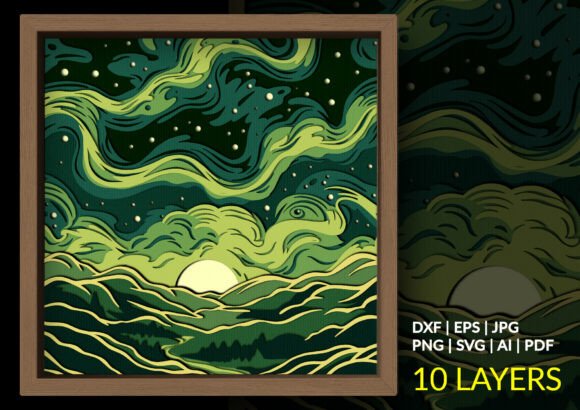
The immediate appeal of Green Starry Night Nature Shadow Box Art lies in its atmospheric depth. Unlike flat, single-layer machine embroidery designs that often lack dimension, this concept leverages the power of layering to create a true sense of space. The description highlights ten distinct layers, which suggests a significant opportunity for creating a tangible, tactile finish. In my experience, when a design moves beyond simple fill stitches to incorporate actual physical separation, the perceived value of the finished product skyrockets.
Visually, the combination of deep greens for the pine forest against the implied darkness of a starry night creates a high-contrast aesthetic that is both modern and timeless. This isn't just a decorative motif; it feels like a scene captured in time. For an Etsy seller or a boutique owner, this kind of imagery signals quality and craftsmanship. It moves away from generic "country" themes into something more sophisticated and moody, perfect for customers seeking unique, handmade decor or personalized gifts that tell a story.
Testing the Waters: A Real-Life Project Scenario
To truly evaluate this design, I imagined a specific use case: creating a limited-run collection of heavyweight canvas tote bags for a local craft fair. The goal was to produce a tote bag design that felt substantial enough to justify a premium price point. If I were using Green Starry Night Nature Shadow Box Art here, the 10-layer structure would be the hero. Instead of a flat print, the customer would feel the ridges of the hills and the texture of the trees as they ran their fingers over the bag.
In this scenario, the machine embroidery design would need to be meticulously planned. The rolling hills would likely require a satin stitch or a very tight fill stitch to define the edges, while the dense pine forest could utilize a textured fill to mimic foliage. The swirling night sky presents a challenge; achieving that fluid motion without puckering the fabric requires careful attention to stitch density. If the density is too high on a heavy canvas, the bag might become stiff. Too low, and the magic of the night sky is lost. This is where the practical judgment of the designer comes into play—balancing the artistic vision with the mechanical limitations of the hoop.
Navigating Fabric and Technical Challenges
While the potential is high, Green Starry Night Nature Shadow Box Art is not a "load and go" design for every situation. The complexity of a 10-layer Shadow Box style means that fabric choice is critical. On thin or stretchy fabrics, such as jersey knit for a t-shirt, the weight of multiple layers could cause severe distortion or sagging. I would strongly advise against using this specific layout on delicate materials unless you are using a very robust stabilizer and potentially fusing the layers together after stitching.
Similarly, curved surfaces like caps or hats present a significant hurdle. The rigid nature of shadow box layers makes them difficult to conform to a rounded surface without creating awkward gaps or tension issues. This design shines best on flat, stable surfaces like pillow covers, aprons, sweatshirt back panels, or framed wall art. Even then, the sheer number of layers means the hoop size must be large enough to accommodate the full composition without forcing the fabric to stretch unnaturally.
For those considering this for custom apparel or sweatshirt embroidery, the placement is key. A centered chest logo might be too bulky if all ten layers are used. A back-of-shirt application offers more room to breathe, allowing the viewer to appreciate the scale of the pine forest and the rolling terrain. Always remember to test the design on scrap fabric first. Check how the different layers interact with your chosen thread colors and ensure the contrast remains visible even in dim lighting.
Commercial Viability and Brand Perception
From a business perspective, incorporating Green Starry Night Nature Shadow Box Art into a product line can significantly elevate brand perception. In the crowded market of digital products and handmade goods, uniqueness is currency. A finished product that features genuine 3D depth stands out immediately against competitors offering flat prints or standard embroidery. This level of detail builds customer trust and suggests that the creator cares about the minutiae of their craft.
For the Etsy seller or small shop owner, this type of design is excellent for creating high-ticket items. Think holiday gifts, wedding favors, or nursery decor. A baby blanket or a personalized pillow featuring this serene wilderness scene becomes an heirloom piece rather than a disposable item. The visual appeal directly correlates to buyer engagement; people stop scrolling when they see texture and depth in a photograph. However, it is crucial to manage expectations regarding production time. Ten layers mean ten times the setup and stitching time compared to a single-layer design.
Practical Designer Notes for Success
If you decide to move forward with this project, treat it with the respect a complex architectural drawing deserves. Here are my essential notes for making Green Starry Night Nature Shadow Box Art work:
- Verify File Details: Since specific stitch counts and exact file formats aren't always clear in initial descriptions, download the digital embroidery file and inspect it in your software before purchasing materials. Ensure the layers are properly sequenced.
- Stabilizer Strategy: You will likely need a cut-away stabilizer for the base layers to support the weight of the subsequent layers. Do not skimp here, or your handmade product may unravel after washing.
- Color Contrast: Test the design in black and white mockups first to ensure the shapes of the hills and trees remain distinct. Then, experiment with varying shades of green and dark blues to create the illusion of distance.
- Licensing Check: Before selling any commercial embroidery items, confirm the licensing terms. Some design assets allow for personal use only, while others grant rights to sell finished goods. Never assume.
- Mockup Testing: Create a printable mockup to visualize how the design looks on different backgrounds. Does the dark forest get lost on a navy blue sweatshirt? Adjust accordingly.
Ultimately, Green Starry Night Nature Shadow Box Art is a powerful tool for designers willing to invest the time and technical skill required to execute it correctly. It transforms a simple embroidery project into a piece of wearable or home art. By respecting the mechanics of the stitch and the physics of the fabric, you can create a product that doesn't just look good—it feels extraordinary.